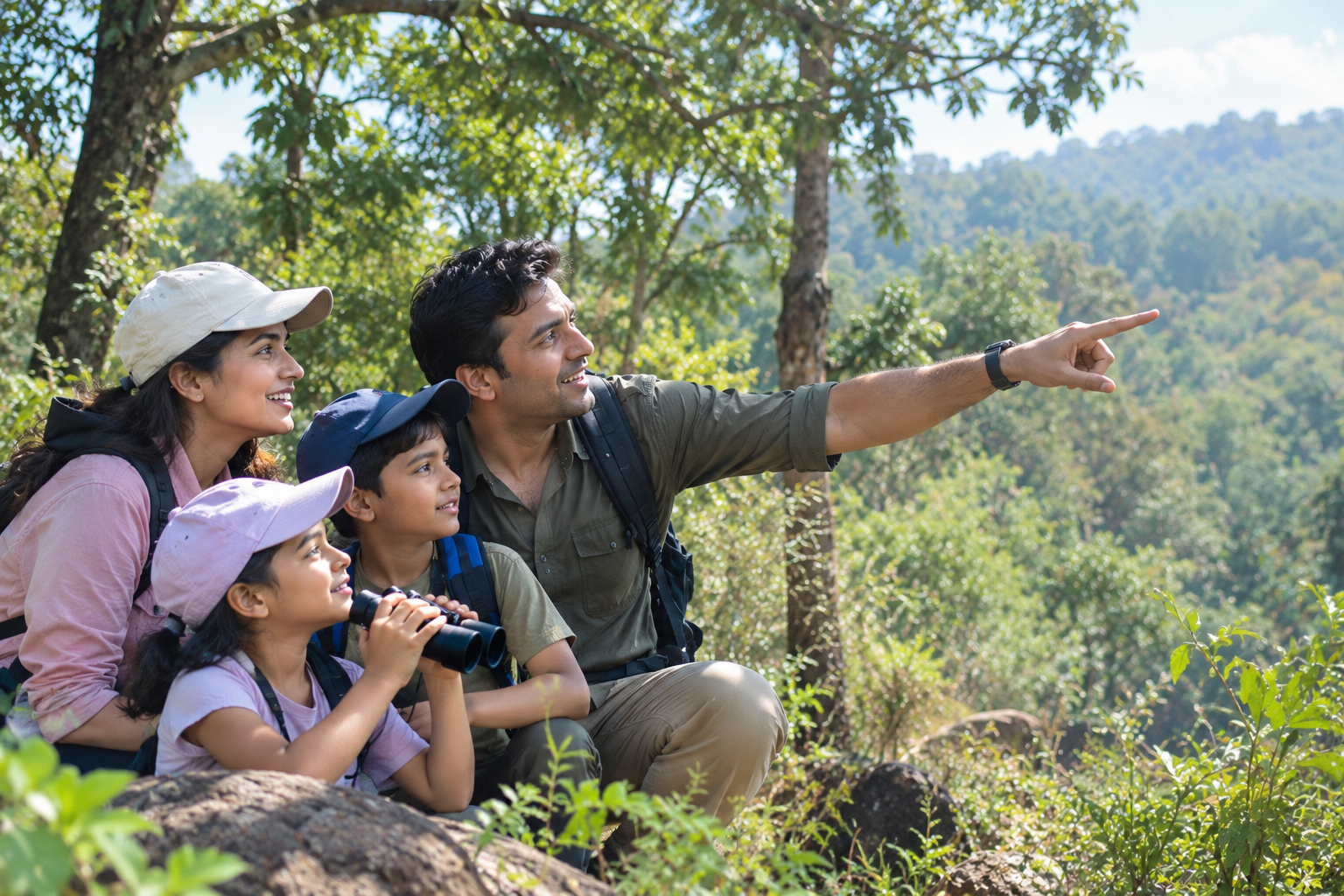
Wildlife lessons from a schoolbook become real-world experience on a visit to Gir for children. Seeing a deer in the woods, hearing birds chirp from the treetops, or learning how a forest supports multiple species can spark a curiosity that lasts long after the holiday has passed. Families can use their time in Gir to teach children about biodiversity, animal behaviour, and conservation, rather than just seeing it as a search for lions.
The trick is to make the experience fun and age appropriate. Children don’t need to be able to identify dozens of species to learn something valuable. Seeing a large mammal can be just as meaningful as seeing how birds communicate or understanding why wild animals need space.
With careful planning, a resort in Sasan Gir can also be a comfortable base for family outings, quiet observation, and conversation about the natural world.
Why Gir is a Family-Friendly Destination
Gir is well known for its Asiatic lions, but the forest ecosystem itself offers plentiful opportunities for learning. Children can learn that forests are interconnected systems in which plants, insects, birds, herbivores, and predators all have a part to play.
What Children Can Learn on a Wildlife Trip
- Observation skills: Watching the movements of animals, bird calls, tracks, and types of vegetation carefully.
- Environmental awareness: Understanding why littering, feeding wildlife, and damaging habitats is bad.
- Patience: Accepting that animals are free to roam and may not be in the anticipated waiting places when guests expect to see them.
- Respect for life: Understanding that wild animals are not pets and should not be touched or approached.
Parents can also help make the visit more fun by asking open-ended questions. "Why do you think that bird is sitting on a high branch?" prompts a child to observe and think, rather than just learn facts.
How to Make a Wildlife Safari an Educational Experience
A safari can be an informal outdoor classroom, with families priming children for what they might see. Your guide will explain the basic rules of safari before you leave. It is very important that everyone remains quiet and follows the instructions given by the guide.
Try These Easy Learning Activities
1. Go on a wildlife spotting game
Ask the children to look for different shapes, colours, or movements, but don’t expect them to spot every animal. They might see a bird on a branch, a deer eating, or the difference between open grass and thick bush.
2. Discuss the food chain
Plants are the source of food for many herbivores, and predators rely on other animals to survive. Keep the explanation suitable for the child's age and avoid portraying predators as villains.
3. Hear the forest
Have children guess where a sound is coming from without making any sounds themselves. Bird calls, rustling leaves, and insect sounds can help them learn a forest is alive even if large animals are not visible.
4. Ask questions
Have the kids ask the guide questions about animal behaviour, habitat, and conservation. If you don't know an answer, don't guess—use it as a learning opportunity for later.
Birdwatching and Other Nature-Related Activities
Learning about wildlife doesn’t have to end when the safari vehicle turns for home. Birdwatching is a great family activity because it takes patience and close attention to detail.
Children can start by watching birds from the allowed outdoor spaces around their accommodation, or from any other suitable places where they have permission to be. A simple bird guide or illustrated checklist can help younger visitors connect what they see with what they learn.
Other Ideas for Family-Friendly Learning
- Nature journaling: Have kids draw an animal, leaf, or bird they saw.
- Colour spotting: Look for a variety of natural colours without picking plants or disturbing insects.
- Habitat comparisons: Discuss why an animal would prefer trees, grassland, or water sources.
- Conservation conversations: Discuss why it’s important to protect forests and the impact of litter on animals.
These activities require little in the way of equipment and can make a short family vacation more memorable. Always practise outdoor activities in areas where they are permitted and never approach nests, feed birds, or enter restricted forest areas.
Family-Friendly Places Near Sasan Gir to Explore
Families can add on nearby attractions if the schedule is comfortable for children. Choose activities based on the length of your trip, the ages of the kids, the weather, and how well-rested your family needs to be.
When you research places near Sasan Gir, you can consider the following options:
- Devalia Safari Park: A different way of viewing wildlife. It provides a good educational opportunity for kids to learn about animals and their habitats. (Please review the current booking rules and access requirements.)
- Somnath Temple: A major cultural and religious centre, ideal for teaching children about local history and architecture.
- The Sasan Gir surroundings: Explore the local landscape, witness rural life, and learn about the relationship between neighbouring communities and wildlife conservation.
- Birdwatching: Ask local guides or your accommodation about approved places for families to watch birds without entering protected ecosystems.
Tip: Don’t try to fit too many stops into a day. Young children often benefit more from one good activity and lots of rest than from a long schedule of rushed sightseeing.
Gir Family Accommodation
Where you stay can make a difference to how smoothly the trip goes, especially when you’re travelling with young children. Families usually appreciate the ability to relax between excursions, comfortable rooms, convenient dining, and an early start.
When comparing a Sasan Gir hotel resort, don’t just look at photos and marketing text. Ask practical questions about the availability of rooms, extra beds, meal timings, accessibility, and whether they have suitable food for children.
A family-friendly nature resort in Gir may also provide opportunities to appreciate the surroundings at a slower pace. But facilities and activities outdoors vary by property, so check what’s available before booking.
Use This Checklist to Compare Options
- Is it easy to get to the property for your planned safari?
- Are the rooms suitable for your family size and their ages?
- Can meals be scheduled around early safari departures?
- Are outdoor areas well-maintained and safe for children?
- Are the property’s facilities, charges, and booking policies clearly presented?
For families searching for the best resort in Gir for families, practical comfort, safety, and convenience should be the priority over amenities they may not actually get around to using.
Raising Kids to Respect Wildlife
One of the most important lessons children can learn from Gir is that wild animals need space and freedom. Parents can reinforce this message through their own behaviour on the trip.
Simple Rules to Share Before You Leave
- Do not feed, touch, chase, or call wild animals.
- Be quiet when watching wildlife and follow the guide’s instructions.
- Never drop litter in the forest or leave food waste behind.
- Do not pick plants or collect feathers or any other natural items.
- Take photographs responsibly and be mindful of restrictions on flash photography and equipment.
It’s also important to prepare children for the possibility that they might not see a lion. Describe how animals are free to roam their habitat and that sightings are subject to many natural factors. This helps children understand the whole ecosystem as opposed to marking the trip by one encounter.
Planning a Family Wildlife Day: Simple Steps
A realistic schedule can make it a fun experience and not too much for younger travellers.
- Early Morning: If your child's age, comfort, and attention span allow, opt for a pre-booked safari. Please bring necessary identification and dress appropriately for the weather.
- Late Morning: Back to your accommodation for breakfast or a meal, rest, and a chat about the animals seen.
- Afternoon: Pick a laid-back activity like nature journaling, birdwatching (where allowed), or a visit to a local attraction that fits.
- Evening: Each child shares one new thing learned. They could draw an animal, describe the behaviour of a bird, or explain why wildlife should not be fed.
Be flexible with your schedule. If your children tire, you can shorten the day’s activities instead of trying to stop at every place you have planned.
Summary
A family trip to Gir could be more than just a wildlife holiday. It can help children develop curiosity, patience, and a lasting appreciation of the natural world. You can learn great lessons from simple things, such as watching birds or learning about food chains and why we need to conserve.
Choose accommodation that fits your family’s needs, plan activities at a relaxed pace, and encourage children to ask questions, not just look for animals. Gir allows families to connect with nature and help the next generation understand the importance of wildlife protection through thoughtful preparation and responsible behaviour.