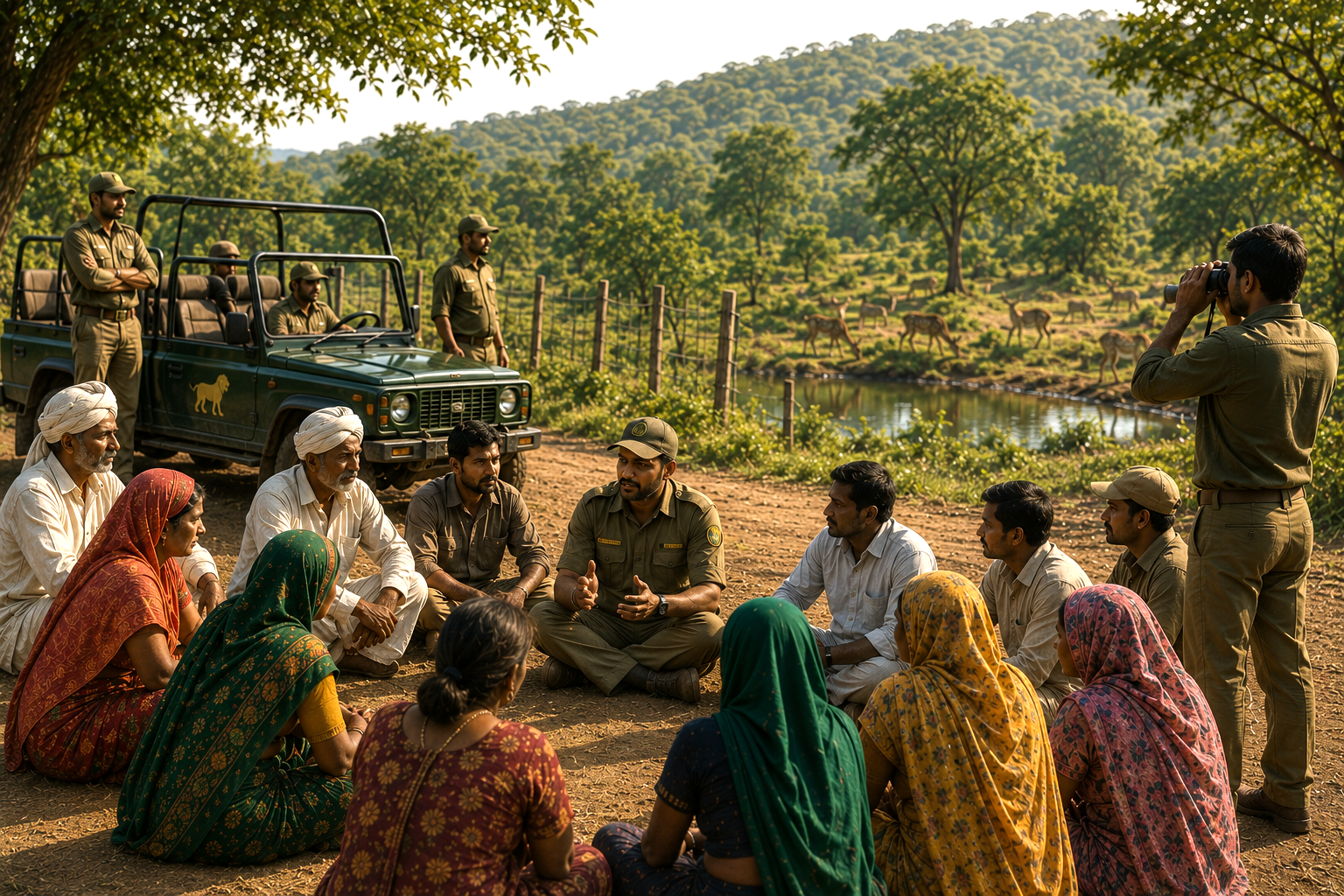
Sasan Gir is globally recognized as the last natural habitat of the Asiatic lion, making it one of India’s most significant wildlife conservation landscapes. While forest authorities and conservation organizations play a vital role in protecting the region, the contribution of local communities is equally important. The long-term success of Gir’s conservation story is largely built on the active participation of villagers, Maldhari pastoralists, eco-tourism stakeholders, and local businesses that work together to preserve the region’s rich biodiversity. Responsible hospitality providers such as Aranya Gir Resort also contribute by promoting eco-friendly tourism practices, creating local employment opportunities, and encouraging visitors to respect the delicate balance of Gir’s wildlife ecosystem.
Today, Sasan Gir stands as an excellent example of how community-driven conservation can support wildlife protection while creating sustainable livelihoods for local residents.
The Unique Relationship Between Communities and Wildlife
For generations, communities living around Gir Forest have shared their environment with lions, leopards, deer, and numerous bird species. Unlike many wildlife destinations where human-animal conflict remains a challenge, people in Gir have gradually developed a coexistence model based on awareness, respect, and conservation values.
The Maldhari community, known for its traditional cattle-rearing lifestyle, has particularly contributed to maintaining ecological balance. Their deep understanding of the forest ecosystem has helped conservation authorities monitor wildlife movements and identify environmental changes over time.
This collaboration has strengthened the overall wildlife protection framework across the region.
Key Ways Local Communities Protect Gir’s Ecosystem
1. Supporting Wildlife Monitoring
Many local residents actively assist forest departments by reporting unusual wildlife activities and helping monitor lion movements near villages.
Their contributions include:
- Reporting injured or distressed animals
- Sharing information about lion sightings
- Alerting authorities about illegal activities
- Assisting rescue operations when required
Such grassroots involvement improves response times and enhances wildlife safety.
2. Promoting Responsible Eco-Tourism
Tourism plays a significant role in the local economy. However, community members increasingly encourage responsible tourism practices that reduce environmental impact.
Visitors staying at a nature resort Sasan Gir often receive guidance from local experts regarding wildlife etiquette, forest regulations, and sustainable travel practices. These educational efforts help tourists become active participants in conservation rather than passive observers.
3. Reducing Human-Wildlife Conflict
Community awareness programs have significantly improved coexistence between people and wildlife.
Local conservation initiatives focus on:
- Livestock protection measures
- Safe waste disposal practices
- Awareness workshops for villagers
- Emergency wildlife response training
These efforts minimize conflicts while ensuring the safety of both humans and animals.
Eco-Tourism Creates Conservation Incentives
One of the strongest conservation drivers in Sasan Gir is eco-tourism. As tourism generates employment opportunities, local communities increasingly recognize the economic value of preserving wildlife habitats.
Hotels, guides, safari operators, handicraft businesses, and accommodation providers all benefit from sustainable tourism growth. Many visitors choose a Gir resort Sasan Gir specifically to experience the region's natural beauty while supporting local livelihoods.
As a result, communities have become direct stakeholders in wildlife conservation, creating a positive cycle where environmental protection supports economic development.
Community-Led Environmental Awareness Programs
Environmental education has become a powerful tool in Gir's conservation strategy. Schools, local organizations, and conservation groups regularly conduct awareness campaigns that teach younger generations about biodiversity protection.
Common topics include:
- Importance of Asiatic lion conservation
- Forest ecosystem preservation
- Water resource management
- Wildlife-friendly farming practices
- Sustainable tourism development
These initiatives help ensure that future generations continue supporting conservation efforts.
Preserving Biodiversity Beyond Lions
Although Gir is famous for its lions, the ecosystem supports hundreds of species that require protection.
The region is home to:
- Leopards
- Striped hyenas
- Chinkara
- Sambar deer
- Nilgai
- Marsh crocodiles
- More than 300 bird species
Local communities contribute by protecting water bodies, preventing habitat destruction, and supporting afforestation activities. Guests staying at a nature resort Gir often participate in nature walks and educational programs that highlight the importance of conserving the entire ecosystem rather than focusing solely on lions.
Sustainable Tourism Strengthens Conservation
Many travelers visit Gir not only for safari experiences but also to explore the cultural and ecological richness of the region. Several places to visit in Sasan Gir showcase the area's natural heritage, including interpretation centers, crocodile breeding facilities, tribal villages, and nearby nature trails.
When tourists engage responsibly with these attractions, local communities receive additional economic benefits while maintaining strong incentives to preserve natural resources.
This sustainable tourism model demonstrates how conservation and development can successfully coexist.
Key Takeaways:
The success of Sasan Gir's wildlife conservation efforts extends far beyond protected forest boundaries. It is the result of strong partnerships between forest authorities, conservation organizations, tourism stakeholders, and local communities who share a common commitment to preserving one of India's most valuable ecosystems.
From wildlife monitoring and environmental education to responsible tourism and habitat protection, local residents continue to play a critical role in safeguarding Gir's future. As tourism grows, choosing eco-friendly accommodations, respecting wildlife guidelines, and supporting community-led initiatives can help visitors contribute to this remarkable conservation success story.
Sasan Gir proves that when communities become active custodians of nature, both wildlife and people can thrive together for generations.