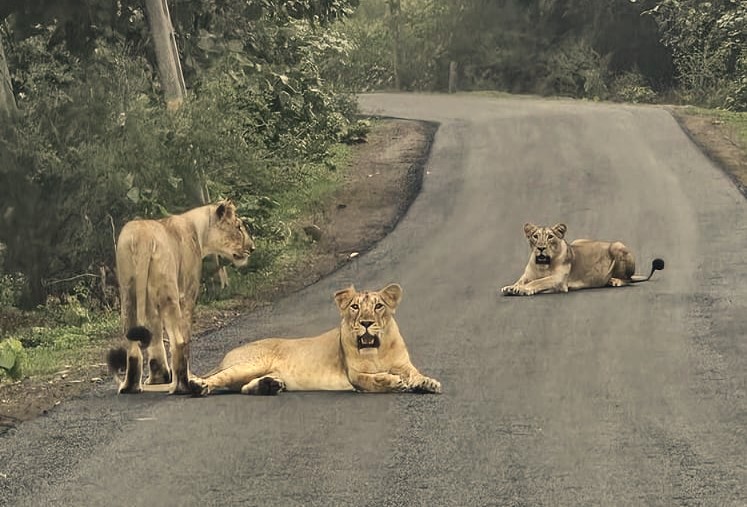
Gir is often introduced by one unforgettable animal: the Asiatic lion. And for a good reason—this is the last natural bastion of this remarkable, great cat. But if your idea of a Gir safari starts and ends with lions, you are seeing only a part of the forest.
Gir is home to a surprisingly diverse range of mammals, birds, reptiles, vegetation, and smaller animals. According to the official information on Gir wildlife, there are about 41 species of mammals, 47 species of reptiles, and more than 300 species of birds. So, the area is much more than just a place to see the big cats.
For travellers willing to slow down and look, Gir has the power to turn an ordinary safari into a lesson in how an entire ecosystem works.
Gir: More Than a Lion Habitat
Gir’s dry deciduous forests, grasslands, hills, valleys, and waterbodies are home to animals with quite different behaviours and survival strategies. The forest is also the catchment of several rivers, adding another important ecological dimension to the landscape.
This is why a safari can be rewarding even if you don’t see a lion. In fact, even the official Forest Department visitor guidelines urge visitors not to be disappointed if they do not see a big cat, but to enjoy the landscape and other wildlife.
So, What Else Should I Watch Out For?
1. Leopards: The Large Cats of the Forest
Leopards are another fascinating predator of Gir, though lions may get most of the attention. They are much more elusive and can be difficult to find, particularly as their behaviour often takes them away from the most obvious safari routes.
Seeing a leopard is thus a different experience from seeing a lion. Perhaps, instead of an open clearing and a large cat sitting confidently in view, you will get only a fleeting glimpse between branches or across a rocky slope.
For those visitors who are keen to see Asiatic lions in Gir, it is worth remembering that patience is as important as luck. That same quiet observation can also reveal other predators.
2. Chital, Sambar, and Nilgai: Forest Herbivores
The herbivores of Gir are the very basis of its food chain. Visitors are likely to see animals like the chital or spotted deer. The larger and darker sambar is another major prey species.
You may also spot the nilgai, India’s largest antelope, moving through more open areas.
Be aware of:
- Chital: Recognised easily by their spotted white coats.
- Sambar: Larger deer, often frequenting woodlands and water sources.
- Nilgai: Large and strong antelope, often associated with open habitats.
- Chinkara: India’s graceful gazelle, well adapted to drier habitats.
- Chousingha: The only four-horned antelope.
- Wild boar: Multi-purpose animals, they constitute another segment of Gir’s intricate food web.
These herbivores are not just "extra animals" to be photographed. They are an important part of the ecological system that supports Gir’s carnivores.
3. Birdwatching Can Be a Safari Experience in Itself
Gir is a birdwatchers' paradise. The ecosystem has recorded over 300 bird species, including both resident and migratory species.
Depending on the season and habitat, one may encounter birds like the Indian pitta, Asian paradise flycatcher, Indian roller, black-headed oriole, crested serpent eagle, and Bonelli's eagle.
Sometimes look up into the canopy, not just at the road in front of you.
Perhaps you've noticed:
- Birds of prey flying over the forest
- Flycatchers flitting between branches
- Woodpeckers excavating tree trunks
- Peacocks in clearings
- Waterbirds in reservoirs and wetlands
For many visitors, this slower form of wildlife watching is one of the most memorable parts of Gir.
4. Crocodiles and Other Reptiles
Gir’s wildlife story goes beyond the treeline. The rivers and waterbodies in the region are home to marsh crocodiles. Monitor lizards and several species of snakes are also part of the ecosystem. Indian rock pythons, star tortoises, and freshwater turtles are also recorded in official Gir resources.
Kamleshwar and other waterbodies can be particularly interesting for visitors who like to watch aquatic wildlife.
The trick is to observe from a safe distance. Watching wildlife is not about getting close to, feeding, or disturbing an animal.
5. Smaller Predators Are Often Overlooked
One of the charms of Gir is that you don’t see everything at once.
It benefits animals such as:
- Jungle cats
- Common jackals
- Striped hyenas
- Indian foxes
- Weasels
- Civets
- Rusty-spotted cats
- Porcupines
- Pangolins
A few of these species are secretive, nocturnal, or inherently elusive. So it’s about being able to see them and be watchful, not just follow the biggest animal you can see.
Choose Your Stay for the Complete Gir Experience
When your itinerary includes early safari departures, nature walks, or time spent exploring the wider Sasan Gir region, a comfortable base can make a difference. Don’t simply book a place to stay just because it looks good in a photo or the rate is low. Consider access, practical convenience, natural surroundings, and how the property fits with your travel plans.
When looking for the best resort in Sasan Gir, travellers should also look outside the room. A peaceful environment, wise safari arrangements, and time to relax in the forest can make a wildlife holiday far more enjoyable.
A Gir Resort Sasan Gir stay can also be a good option for travellers who want to balance their safari time with relaxed evenings, instead of treating Gir as a rushed one-day stop.
Devalia Gives Another Perspective of Gir
Devalia’s Gir Interpretation Zone was created to give visitors an intensive experience of the Gir ecosystem. It depicts the forest and wildlife of the area and provides opportunities to see animals like the lion, leopard, spotted deer, sambar, nilgai, blackbuck, wild pig, and many varieties of birds.
It can be especially useful for families and first-time visitors who want to get introduced to the biodiversity of Gir.
Why Responsible Wildlife Watching Matters
A safari is not simply about the quality of the animals you see in pictures.
Adhere to the basic principles:
Keep your distance from animals.
- Keep noise to a minimum; keep voices down.
- Do not feed wildlife.
- No spitting.
- Remain within the authorised vehicle and route.
- Animals should not be disturbed for photographs.
- Follow the directions of authorised guides and forest staff.
These are not just tourism etiquettes—they protect the very ecosystem that people have come to experience.
Conclusion
The Asiatic lion may be Gir's flagship species, but it's not the only story. Gir offers a much broader wildlife experience, from leopards and chital to crocodiles, raptors, jackals, and surprisingly elusive smaller mammals.
Next time you go into the forest, don't just ask, "Where are the lions?" Look at the trees, listen for the birds, scan the grasslands, and watch the water. That’s when Gir starts to show itself as an ecosystem, not just a lion destination.