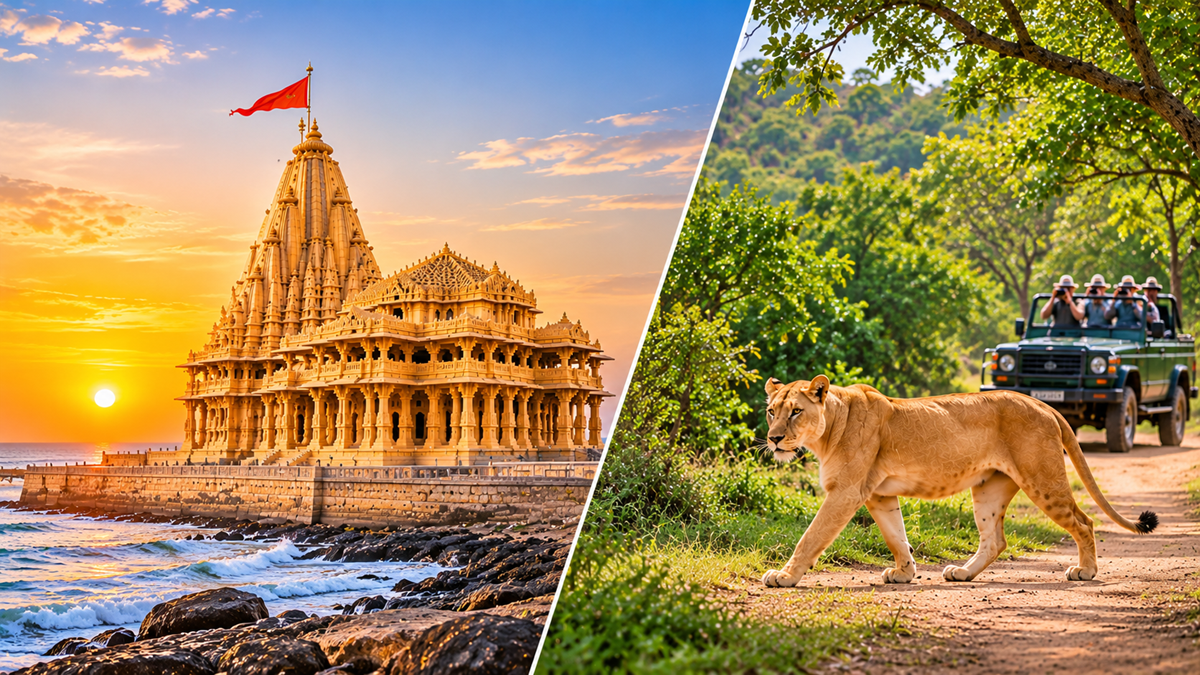
Few trips in Gujarat pair two such different moods as this one. Gir is about early mornings, jeep tracks and the chance of a lion in the trees. Somnath is about temple bells, the Arabian Sea and quiet evenings. The two sit roughly an hour or so apart, which makes a combined wildlife and spiritual getaway easy to plan, if you pace it well.
Spend two nights near Sasan Gir for safaris and one night (or a long day) around Somnath for the temple and the coast. Do the Gir safari first, since permits and slots fill up, then travel to Somnath at an easy pace. The best season is November to February.
Why This Combination Works
Gir National Park is the only wild home of the Asiatic lion. Somnath Temple, on the coast near Veraval, is one of the twelve Jyotirlinga shrines and has been rebuilt many times over the centuries. Put them together and you get a trip with nature, history and faith, without long flights or complicated logistics.
The distance between the two is modest, usually around an hour or a little more by road, depending on traffic and your starting point. That means you can base yourself in one place and visit the other or split your nights between them. Check the current travel time on a map app before you commit to a schedule.
Choosing Where to Stay
For most travellers, the Gir side is the better base, because safari timings are strict and early. A Sasan Gir hotel resort close to the park gate saves you from rushing at dawn, and you can still make a day trip to Somnath on a non-safari day. If you prefer a sea view and a temple-first trip, a night in Somnath or Veraval also works.
Questions worth asking before you book:
- How far is the property from the safari entry point?
- Can the staff help arrange permits, transport and a driver for Somnath?
- Are meals available at early hours before a safari?
- Is there a naturalist or local guide on site?
A Simple 3-Day Itinerary
This is a practical starting point rather than a fixed rule. Adjust it to your pace, your group and the season.
Day 1: Arrive and settle near GirReach by afternoon, check in and rest. If time allows, visit nearby spots such as Devalia Safari Park or simply relax at your stay. Go to bed early, because safari mornings begin in the dark.
Day 2: Safari morning, Somnath afternoon
Take the early Gir safari. Return, have breakfast, and rest briefly. Drive to Somnath in the afternoon and plan to arrive before the evening aarti. Stay overnight there or return, depending on your energy.
Day 3: Somnath and the coast
Visit the temple in the morning, when it is calmer. Spend time at the seafront, then head home or onward to Diu.
If you prefer a slower trip, add a fourth day and take a second safari, since no two Gir drives are the same.
What to See Around Somnath
The temple is the heart of the visit, but the surrounding area adds depth. Common additions include:
- Triveni Sangam: A sacred river confluence close to the sea.
- Bhalka Tirth: Linked in tradition to the end of Krishna’s earthly life.
- Somnath beach: A calm place to sit after the temple crowds.
- Prabhas Patan museum: Gives context to the site’s long history.
- Evening light and sound show: Offered in some seasons, so verify timings.
Temple timings, aarti schedules and dress rules can change, so confirm them on the official Somnath Temple Trust website or at your front desk before you go.
Wildlife Experiences Around Gir
A good Gir visit includes more than a lion sighting. With a bit of planning, you can fit in:
- Jeep safari: The main event, with early and afternoon slots.
- Birdwatching: Winter brings migratory species along with residents like the Indian eagle-owl.
- Kamleshwar Dam: A water body where marsh crocodiles are sometimes seen.
- Village and local life: Gir’s edge is dotted with villages where you can see how people live alongside the forest.
Staying at a wildlife Gir resort with trained naturalists adds real value here. They know which trails have been active, can explain animal behaviour and help you plan around changing safari rules. That kind of local knowledge is hard to get from a website.
Best Time to Visit
Winter, from November to February, suits both halves of the trip. Gir is cool and open, and Somnath is comfortable for walking around the temple and the beachfront. Summer can be very hot, which makes safaris and temple queues tiring. The park closes during the monsoon, roughly mid-June to mid-October, so plan within the open window.
Peak winter weekends and festival days get crowded in both places. Book your stay and safari permits well ahead and consider travelling midweek if you can.
Exploring Places Near Sasan Gir
If you have an extra day, several places near Sasan Gir are worth adding:
- Junagadh: Known for Uperkot Fort, old stepwells and the Girnar hill.
- Diu: A relaxed coastal town with beaches and Portuguese-era architecture, a few hours’ drive away.
- Devalia Safari Park: A shorter, fenced introduction to Gir’s wildlife.
Pick one rather than trying all three. Overpacking the schedule is the most common mistake on this circuit.
Practical Tips Before You Go
- Carry modest clothing for temple visits, and shoes that are easy to remove.
- Pack layers. Gir mornings are cold in winter.
- Keep ID handy for safari permits and hotel check-in.
- Arrange transport early. Hire a driver or confirm taxi availability for the Somnath leg.
- Verify the rules officially. Safari permits via the Gujarat forest department portal, temple details via the Somnath Trust.
Final Thoughts
This trip works because it asks you to slow down in two different ways: once to watch the forest, and once to sit by the sea. Give each part enough time, start safaris early, and keep your plans flexible. You’ll come home with memories of both.